Dental Implant in the Aesthetic Zone
Rehabilitation of a failing tooth in the aesthetic zone is one of the most demanding procedures in implant dentistry.
In this region, success is not only defined by osseointegration, but by the ability to maintain stable hard and soft tissues that reproduce a natural emergence profile over time.
In this case, a maxillary incisor with severe structural and periodontal compromise required extraction. The main challenge was not simply replacing the tooth, but managing the pre-existing bone defect and maintaining aesthetics in a highly visible area.
Initial clinical situation and treatment challenge
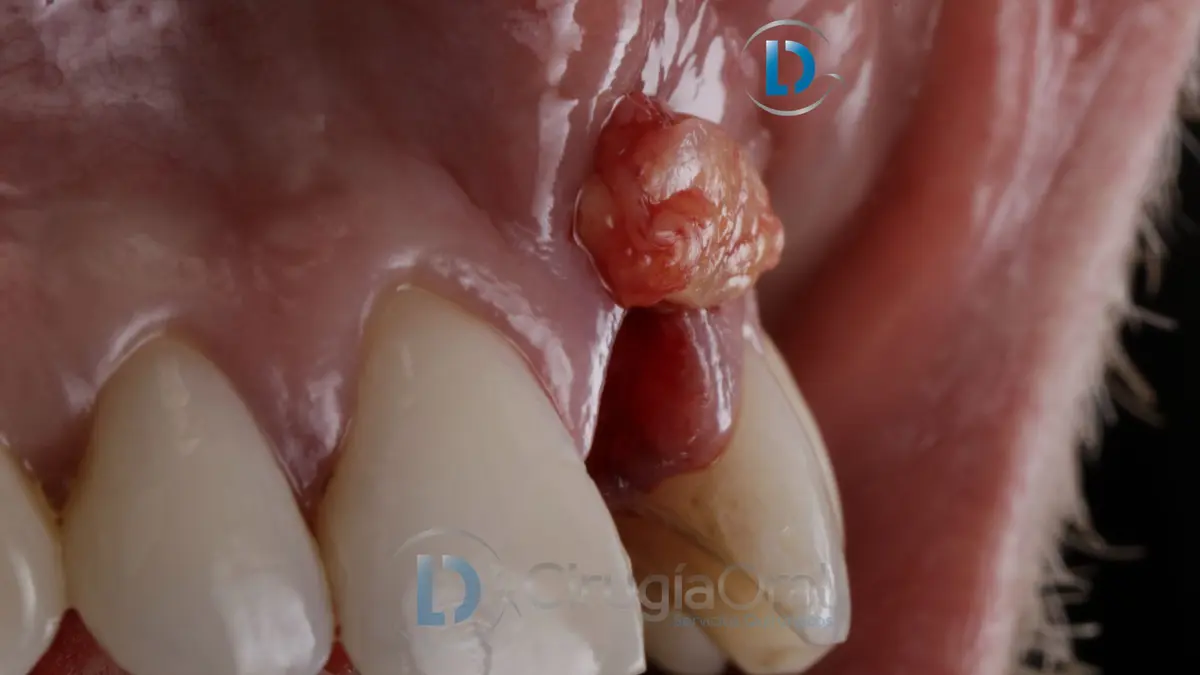
The patient presented with a failing anterior tooth with significant mobility and compromised periodontal support. Radiographic and clinical assessment confirmed the presence of a localized bone defect, together with a high aesthetic demand due to the position of the tooth in the smile line.
The complexity of the case was determined not only by the need for extraction, but by the risk of post-extraction collapse of both hard and soft tissues, which could compromise the final aesthetic outcome.
Treatment planning and surgical strategy
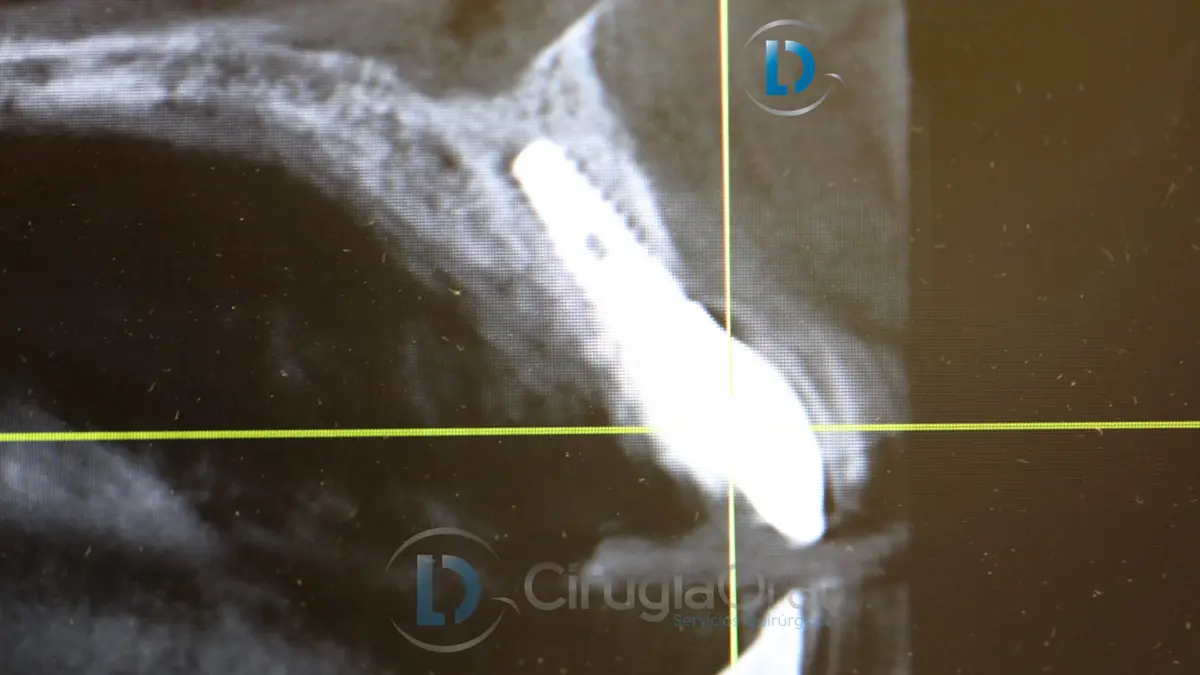
Clinical and radiographic evaluation identified several key factors that influenced treatment planning:
- Need for extraction of the compromised maxillary incisor.
- Presence of a bone defect in the anterior maxilla.
- Soft tissue volume deficiency.
- Possibility of immediate loading depending on the achievement of adequate primary stability.
Based on these findings, a combined treatment approach was planned, including:
- Immediate implant placement following extraction.
- Simultaneous bone grafting.
- Soft tissue augmentation.
- Immediate provisional restoration.
Careful treatment planning was particularly important in this case due to the high aesthetic demands associated with the anterior maxilla. The objective was not only to replace the failing tooth, but also to preserve tissue architecture and create the conditions for a stable long-term aesthetic outcome.
Immediate implant placement in the anterior maxilla
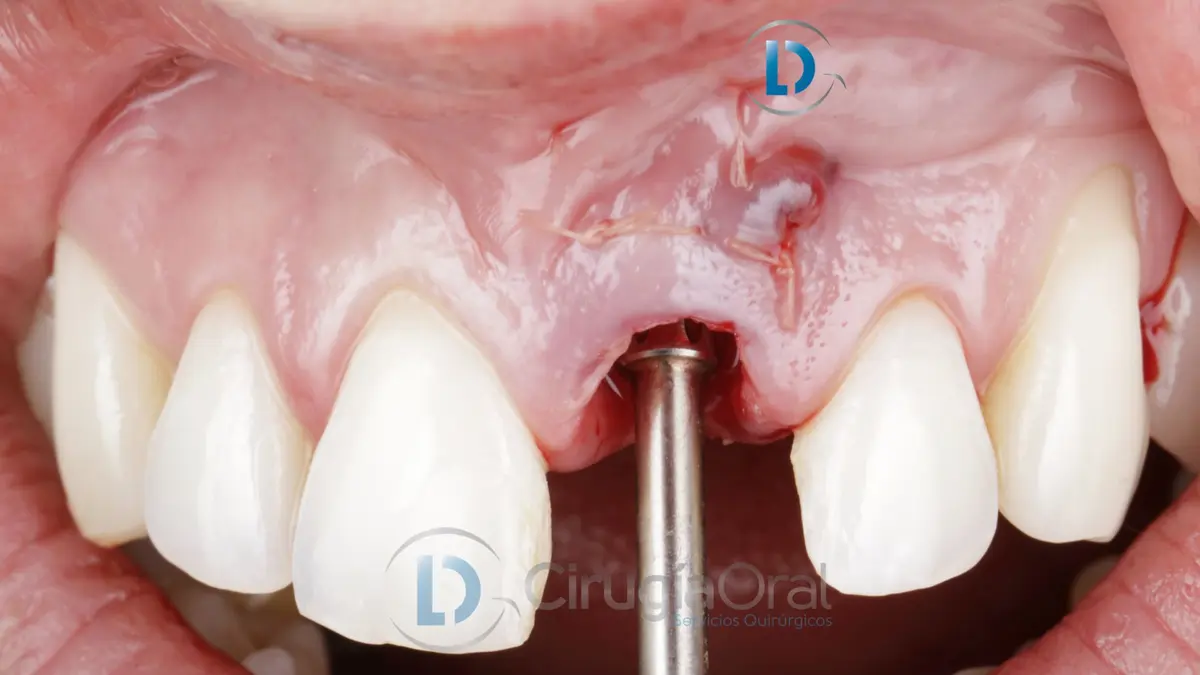
After atraumatic extraction, the implant was placed immediately into the socket. Primary stability was achieved, allowing continuation with the planned restorative sequence.
In the aesthetic zone, implant positioning is critical because even small deviations can affect the emergence profile and symmetry with adjacent teeth. In this case, immediate placement helped maintain the spatial relationship of the soft tissues and reduce collapse of the socket walls.
Bone grafting and defect management
Bone augmentation was performed simultaneously with implant placement to address the existing defect around the socket.
The rationale for grafting in this case was not only to fill the defect, but to preserve the three-dimensional bone contour and support long-term stability of the peri-implant tissues.
Key objectives of the regenerative phase included:
- Compensation of the pre-existing bone deficiency
- Maintenance of ridge contour after extraction
- Support for long-term soft tissue stability
- Improvement of predictability in the final aesthetic outcome
The regenerative procedure was fully integrated into the implant surgery, avoiding a staged approach.
Soft tissue augmentation and aesthetic control
Soft tissue management was considered essential due to the high aesthetic demands of the anterior maxilla.
In this case, soft tissue augmentation was performed to improve tissue thickness and support long-term stability around the implant restoration.
Rather than focusing only on volume gain, the aim was to influence the future emergence profile and reduce the risk of recession in a visible area of the smile.
Immediate loading and provisional restoration
Once adequate primary stability was confirmed, an immediate provisional restoration was delivered.
This step allowed functional and aesthetic rehabilitation from the day of surgery and played an active role in guiding soft tissue healing during the early phases.
Immediate loading provided:
- Preservation of peri-implant soft tissue contours
- Early shaping of the emergence profile
- Improved aesthetic outcome during healing
- Increased patient comfort and acceptance of treatment
The provisional restoration acted as a biological guide for tissue adaptation.
Clinical outcome and long-term considerations
The combination of immediate implant placement, bone grafting, soft tissue augmentation and immediate loading allowed successful rehabilitation of a complex aesthetic zone in a single coordinated protocol.
The case reinforces the importance of integrated planning in anterior implant dentistry. Predictable outcomes depend not on isolated techniques, but on how bone, soft tissue and prosthetic factors are managed together from the moment of extraction.
Long-term stability in these cases is directly linked to three-dimensional implant positioning, soft tissue quality and controlled emergence profile development.