Digital Guided Surgery in Implantology: Benefits, Accuracy and Limitations
Digital guided surgery has revolutionized implant placement by allowing clinicians to transfer a precise virtual plan directly into the patient’s mouth. What used to depend heavily on experience and freehand skill is now highly predictable and prosthetically driven.
This article examines the real benefits, scientific accuracy and current limitations of guided workflows.
How Digital Guided Surgery Works
The process starts with CBCT imaging + intraoral scanning. The data is merged in planning software where the ideal implant position is chosen according to bone quality, prosthetic needs and anatomical safety. This plan is then transferred to the surgery via:
- Static surgical guides (3D-printed)
- Dynamic navigation systems (real-time tracking)
Main Benefits of Guided Implant Placement
- Higher accuracy: Significantly lower deviations in position, angle and depth
- Reduced surgical time (especially in full-arch cases)
- Minimally invasive surgery (flapless in selected cases)
- Better aesthetic and prosthetic outcomes
- Shorter learning curve for clinicians with less surgical experience
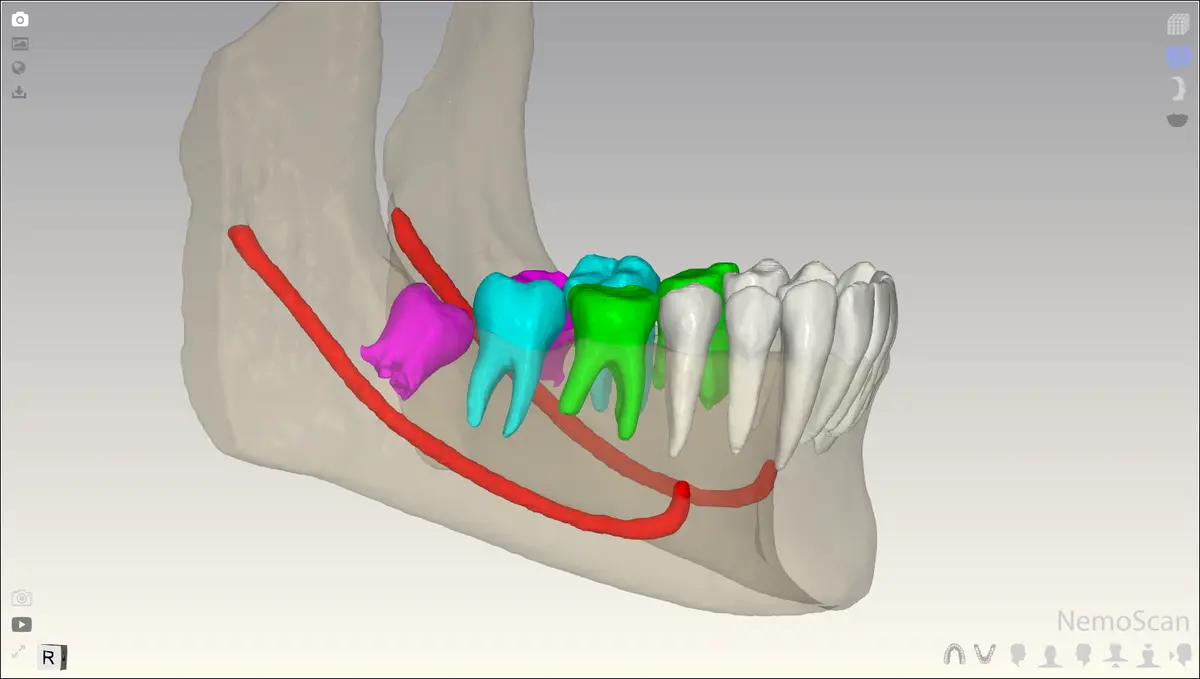
Improved patient safety by avoiding critical structures (nerves, sinus, vessels)
Accuracy: What Does the Science Say?
Recent systematic reviews show:
- Static guides: average deviation ~1.0–1.5 mm at entry point and 2.5–4° angular
- Dynamic navigation: often <1.0 mm and <3° angular
- Freehand placement: significantly higher deviations (especially in vertical and angular planes)
The difference becomes even more relevant in esthetic zones, atrophic ridges and full-arch rehabilitations.
Static Surgical Guides vs Dynamic Navigation
Static guides are excellent for straightforward and medium-complexity cases. They are cost-effective but do not allow intraoperative changes.
Dynamic navigation offers real-time visualization and the possibility to adjust the plan during surgery. It is particularly useful in immediate loading protocols and anatomically demanding situations, although it requires a higher initial investment and learning curve.
Limitations and When Guided Surgery May Not Be the Best Option
- Higher cost of guides and equipment
- Learning curve for the full digital workflow
- Guide stability issues in patients with limited mouth opening
- Potential inaccuracies due to poor scan quality or guide movement
- Overkill for very simple single-tooth cases in abundant bone
Experienced surgeons can still achieve excellent results freehand in straightforward situations, but digital guided surgery provides a clear safety net in complex cases.
Integrating Guided Surgery into Daily Practice
The combination of CBCT, intraoral scanning, AI-assisted planning and guided execution creates a fully digital workflow that improves outcomes, reduces stress and increases case acceptance.